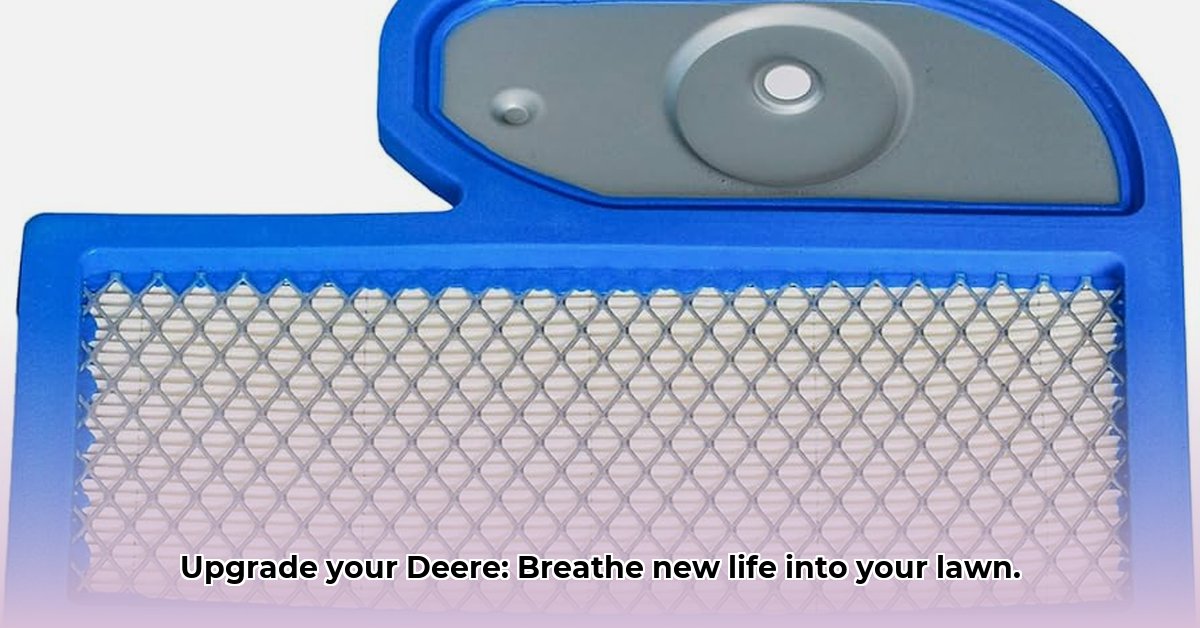
Maintaining peak performance in your John Deere lawn tractor requires diligent upkeep, and a critical component often overlooked is the air filter. A clean air filter ensures optimal engine performance, reduces fuel consumption, extends engine lifespan, and contributes to sustainable farming practices. For more information on John Deere lawn tractor maintenance, check out this helpful resource: John Deere Tires. This guide will walk you through choosing, maintaining, and replacing your air filter effectively.
Choosing the Right Air Filter: OEM vs. Aftermarket
The selection hinges on two primary options: Original Equipment Manufacturer (OEM) filters, produced by John Deere, and aftermarket filters offered by various companies. OEM filters, while pricier upfront, are engineered specifically for your John Deere tractor model. This precision design usually translates to superior filtration, longer lifespan, and better engine protection. But are they always worth the extra cost?
Why choose an OEM John Deere air filter? Dr. Amelia Hernandez, Agricultural Engineer at the University of California, Davis, explains, "OEM filters typically offer a tighter filtration, meaning less dust and debris reach the crucial engine components. This reduces wear and tear and significantly extends the engine's lifespan." This longer lifespan contributes directly to sustainable farming by reducing the need for frequent equipment replacements.
Aftermarket filters, on the other hand, often come with a lower initial price tag. However, their quality and durability vary greatly. While some rival OEM performance, others fall short, potentially causing premature engine wear and increased fuel consumption.
Isn't a cheaper filter a better deal? Not necessarily. Consider the long-term costs: a lower-priced filter that needs replacement every three months could cost more than a higher-priced OEM filter lasting a year. Regular maintenance and the right filter are investments that pay off over time.
How Often Should You Change Your Air Filter?
The recommended replacement frequency depends on several factors: usage intensity, operating environment (dusty conditions require more frequent changes), and the specific model of your John Deere tractor. Consult your owner's manual for model-specific recommendations. As a general guideline, aim for a visual inspection every few months and a replacement at least once annually.
A Quick DIY Inspection:
- Visual Check: Examine the filter for visible dirt or discoloration. A clean filter is light-colored; a dirty filter is darker and may appear matted. A significantly darker filter is a clear sign it needs replacing.
- Feel Test: Gently squeeze the filter. Does it feel restricted or stiff? This indicates restricted airflow and necessitates replacement.
Replacing Your Air Filter: A Step-by-Step Guide
Replacing your air filter is a straightforward DIY task:
Locate the Air Filter Housing: Your owner's manual precisely indicates the air filter's location. It's usually easily accessible.
Access the Filter: Carefully remove any retaining clips or latches securing the housing. Remove the old filter, noting its orientation for correct reinstallation.
Clean the Housing: Inspect the housing for debris. Use a brush or compressed air to remove any significant accumulation. Cleanliness prevents premature new filter contamination.
Install the New Filter: Insert the new filter, ensuring correct orientation and a snug fit. Forceful insertion is a sign of misalignment.
Secure the Housing: Reassemble the housing, ensuring all latches and clips are securely fastened.
OEM vs. Aftermarket: A Detailed Comparison
This table underscores the primary differences between OEM and aftermarket filters:
| Feature | OEM John Deere Air Filter | Aftermarket Air Filter |
|---|---|---|
| Filtration Efficiency | Typically higher, better protection | Variable; can be significantly lower |
| Lifespan/Durability | Generally longer-lasting | Often shorter lifespan |
| Initial Cost | Higher | Lower |
| Warranty | Covered under John Deere's warranty | Typically no warranty provided |
| Environmental Impact | Potentially lower due to longer lifespan | Can be higher due to increased waste |
The Long-Term Perspective: Sustainable Farming and Efficient Operations
While the initial cost of OEM filters is higher, the investment in superior engine protection often pays dividends in the long run. This translates into several key benefits: reduced fuel consumption, fewer costly repairs, and a longer overall equipment lifespan. These are all hallmarks of sustainable farming practices.
Proactive maintenance like timely air filter replacement contributes significantly to both environmental sustainability and economic efficiency. By minimizing downtime and maximizing equipment longevity, you're actively reducing your environmental footprint and boosting your farm's bottom line.
How to Compare OEM and Aftermarket Filters for Cost and Environmental Impact
This detailed comparison provides practical guidance for making informed decisions regarding your air filter choices. Remember, this is an investment in your equipment's longevity and your farm's sustainability. Choose wisely!